
The Primary Years Programme (PYP), developed by the International Baccalaureate (IB), is a comprehensive educational framework designed for children aged 3 to 12 years.
As an IB World School, our educational philosophy reflects the IB Mission Statement and is guided by the IB Standards and Practices, promoting the development of a more peaceful world through inquiry, international-mindedness, and meaningful learning experiences.
In the kindergarten, the Primary Years Programme (PYP) is implemented in alignment with both the values of the International Baccalaureate and our school's Mission Statement, while fully respecting and meeting the requirements of the Greek National Curriculum.
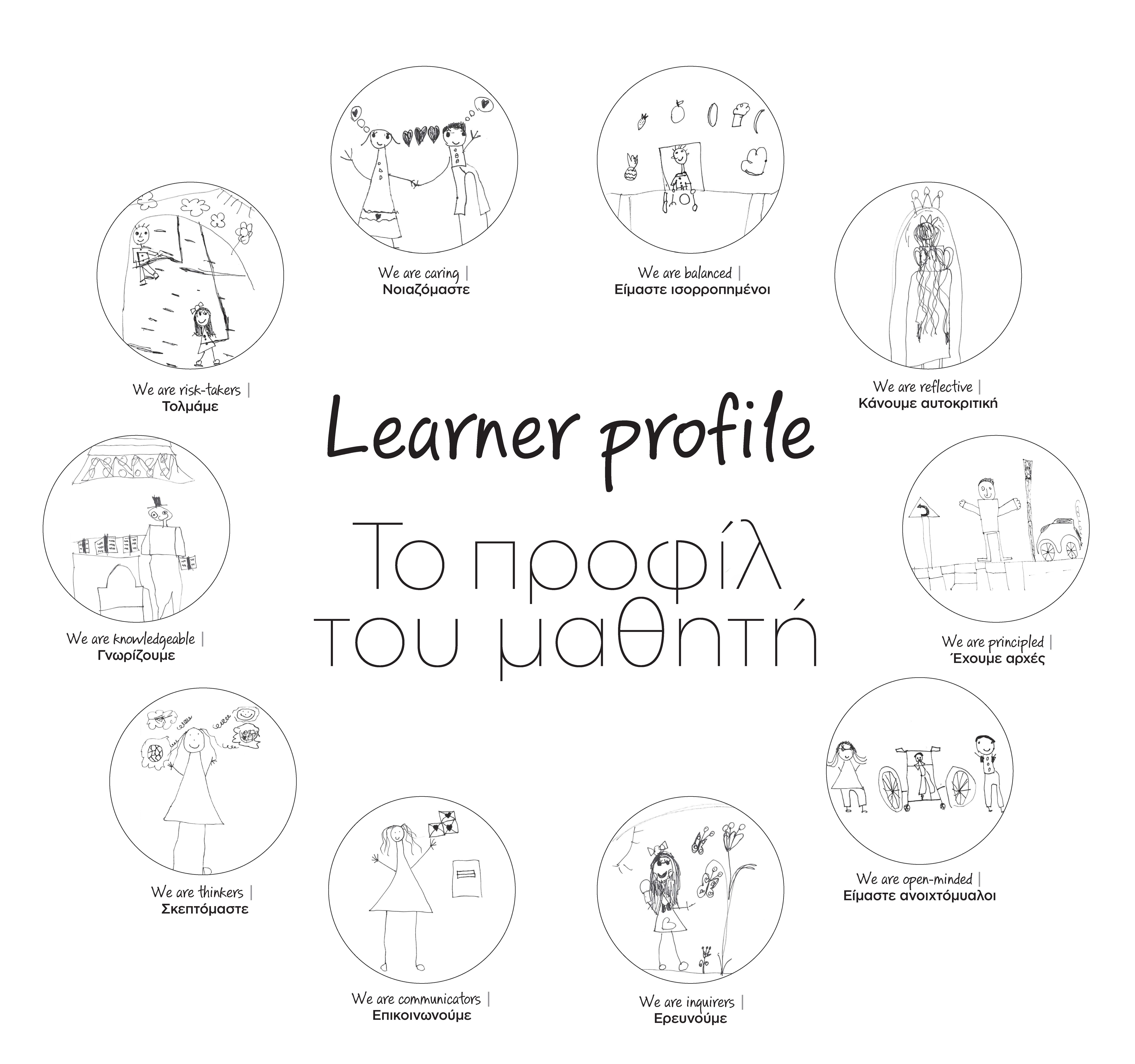 |  |
At the heart of all International Baccalaureate® programmes, is the IB Learner Profile. It consists of ten learner attributes that inspire students to become inquirers, thinkers, communicators, principled, open-minded, caring, risk-takers, balanced, reflective, and knowledgeable.
The Learner Profile nurtures a lifelong love of learning, supports the holistic development of every child, and lays the foundation for international-mindedness. These qualities are developed through the intentional cultivation of the Approaches to Learning (ATL)—a set of transferable skills that empower children to become confident, independent, and self-directed learners.
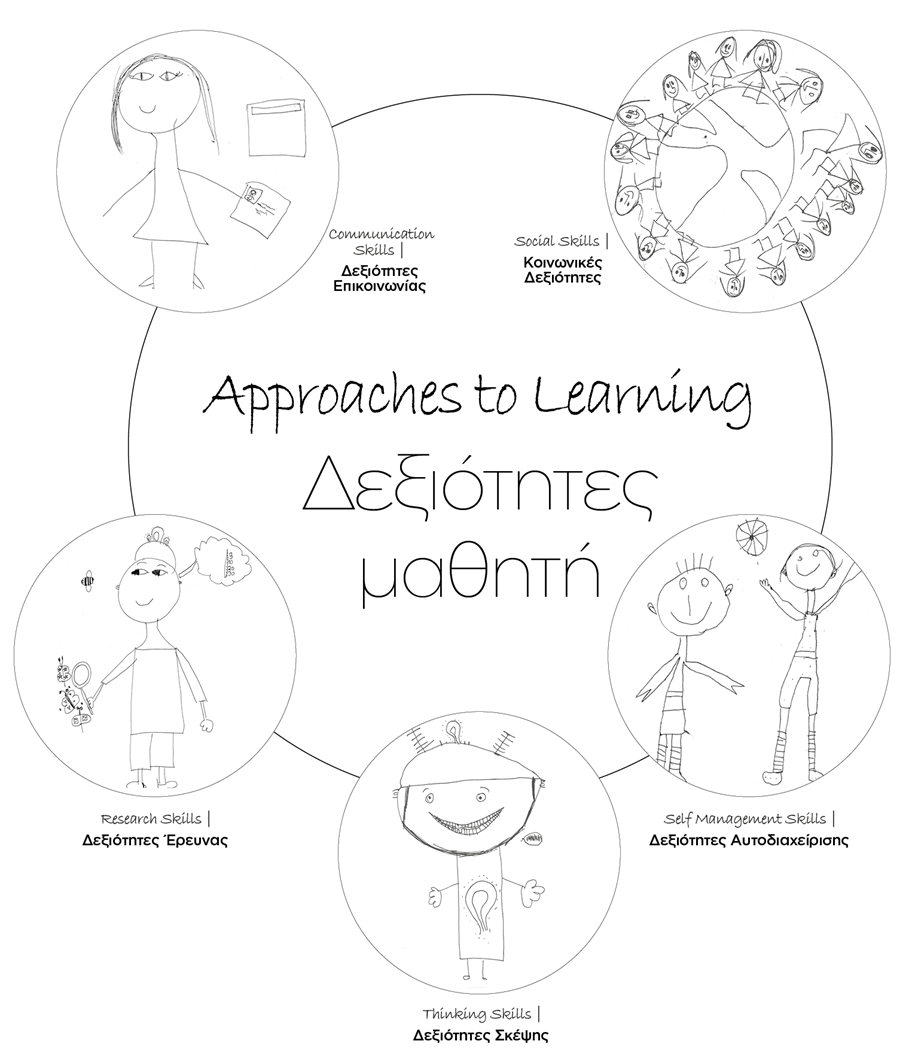
More specifically, students progressively develop a broad range of Approaches to Learning (ATL) Skills, including Social Skills, Communication Skills, Thinking Skills, Research Skills, and Self-Management Skills.
For example, a visit to a nearby park or natural environment provides children with opportunities to develop Thinking Skills by observing, comparing, and identifying the characteristics of plants and animals. At the same time, they strengthen their Research Skills by collecting information, documenting their observations through drawings or simple notes, and asking meaningful questions.
Through play, children naturally develop Communication Skills as they listen attentively, express their ideas, and take on different roles in imaginative play. They also build Social Skills by collaborating with their peers, sharing responsibilities, and showing empathy and respect for others.
Furthermore, participation in physical and movement-based activities helps children strengthen their Self-Management Skills by developing perseverance, resilience, self-regulation, and the confidence to overcome challenges and try again.
Students discover their intrinsic motivation for learning and are continuously encouraged to broaden and enrich their knowledge, gradually develop the aforementioned skills, and adopt responsible attitudes towards life.
This threefold approach reflects the demands of the 21st century: students are expected to approach knowledge through inquiry and interdisciplinary learning, develop Approaches to Learning (ATL) Skills, cultivate Dispositions, and become aware of their role as global citizens. Within this framework, the Primary Years Programme (PYP) is connected to the United Nations Sustainable Development Goals (UN Global Goals), enabling children, from the early years of education, to develop values such as peace, responsibility, equality, and respect for the planet.
Action contributes to students' awareness and effective use of their abilities, enabling them to apply in practice what they have learned. At the same time, they are given opportunities to make Choices, have their own Voice, and gradually take Ownership of their learning process.
The ultimate aim is for students, as critical thinkers and socially responsible citizens, to develop Agency and take responsible Action for the benefit of society, so that they are able to respond successfully to the challenges of an international environment, both now and in the future.

For early years students, this begins with developing a sense of belonging with those who are closest to them—their family, friends, school, and local community. Gradually, this sense expands to include a deeper awareness of, connection with, and responsibility towards wider communities, leading to actions that contribute to positive change.
Children can take Action at any time and in many different forms. Action that is initiated by the children themselves is the result of experiences that are personally meaningful to them and demonstrates that they have succeeded in connecting their learning with real-life issues. It may take the form of a single act or an ongoing process, carried out individually or collectively. Action is not always visible to others—it may consist of small everyday acts that become part of children's daily lives.