
Learning through inquiry
Children are naturally curious. In the PYP, questions, observations, experiences and problems provide starting points for learning.
Students are encouraged to wonder, investigate, gather and evaluate information, test ideas, consider different perspectives and draw conclusions. With guidance from their teachers, they gradually take a more active role in this process.
For younger students in particular, exploration, play and hands-on experiences are important parts of learning.
Learning through concepts
Students do more than collect facts. They explore broader ideas that help them understand why things happen, how ideas are connected and how learning can be applied in new situations.
Units of Inquiry are developed around a central idea, lines of inquiry and relevant concepts. Together, these help students develop deeper and more transferable understanding.
Transdisciplinary learning
At Athens College, students are encouraged to make meaningful connections across subject areas and apply their learning in authentic contexts.
Subject-specific knowledge and skills remain important. At the same time, students explore significant ideas that extend beyond the boundaries of a single subject and learn to transfer their understanding to new situations.
Approaches to Learning (ATL) skills
The PYP helps students develop skills they can use across subjects and throughout their lives. These are known as the Approaches to Learning (ATL) skills:
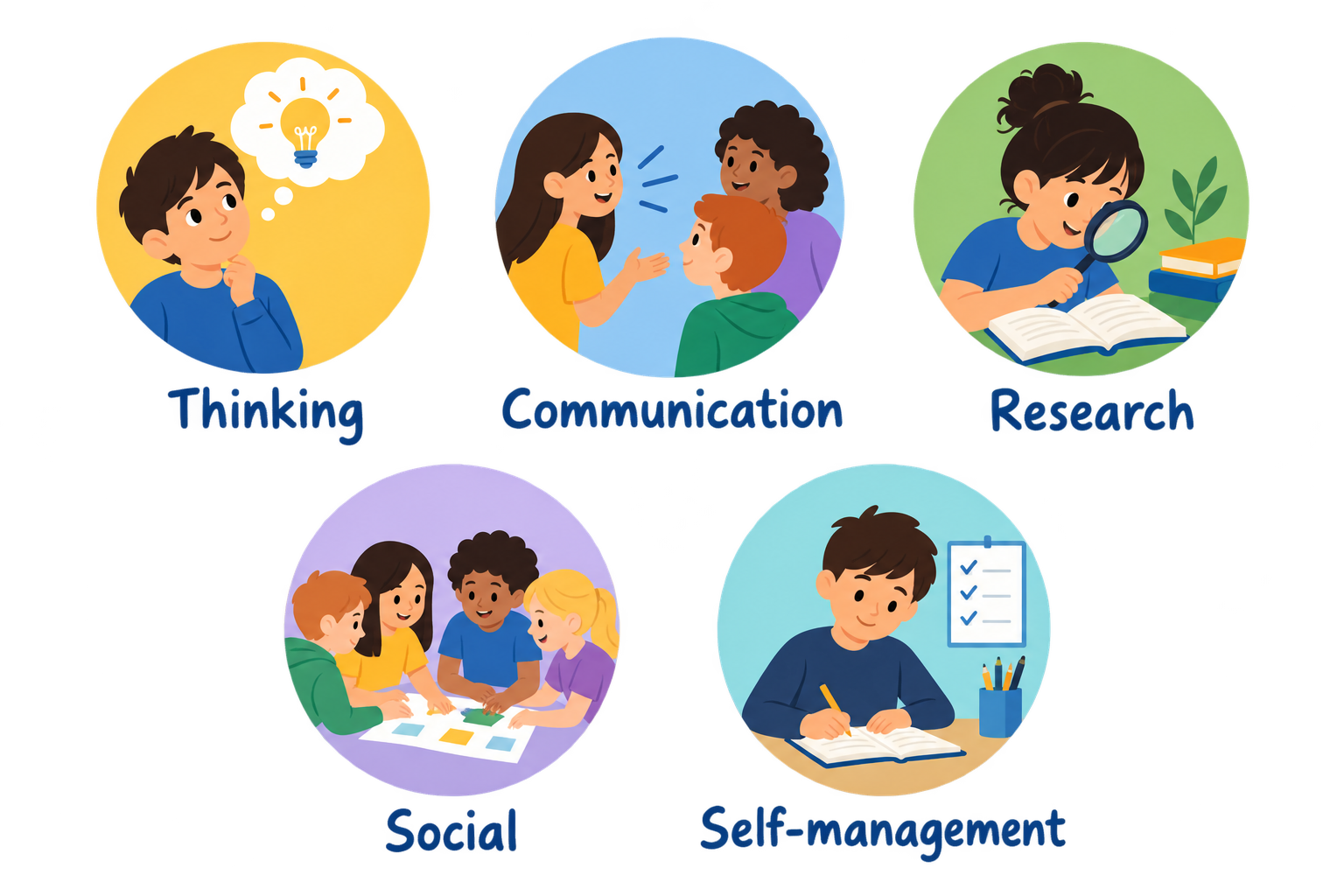
Students practise these skills in different contexts, reflect on their progress and learn to use them with increasing independence.
Student agency
Students are active participants in their learning. Student agency includes:

This may include asking questions, setting goals, choosing how to demonstrate understanding, responding to feedback, contributing to classroom decisions and initiating action.