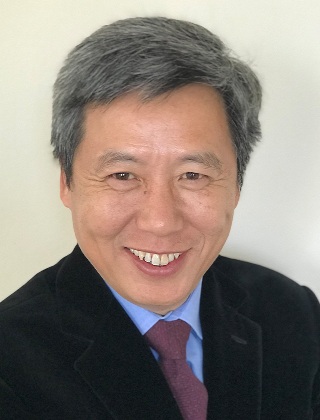
Yong Zhao
Professor at University of Kansas & University of Melbourne
Dr. Yong Zhao is a Foundation Distinguished Professor in the School of Education at the University of Kansas. He previously served as the Presidential Chair, Associate Dean, and Director of the Institute for Global and Online Education in the College of Education, University of Oregon, where he was also a Professor in the Department of Educational Measurement, Policy, and Leadership. Prior to Oregon, Yong Zhao was University Distinguished Professor at the College of Education, Michigan State University, where he also served as the founding director of the Center for Teaching and Technology, executive director of the Confucius Institute, as well as the US-China Center for Research on Educational Excellence. Additionally, he worked as a professor of educational leadership in the Faculty of Education at University of Melbourne and senior researcher at the Mitchell Institute of Victoria University in Australia. He was a visiting Global Professor at University of Bath and a visiting scholar at Warwick University in the UK.
He is an elected member of the National Academy of Education and a fellow of the International Academy of Education.
Yong Zhao has received numerous awards including the Early Career Award from the American Educational Research Association, Outstanding Public Educator from Horace Mann League of USA, Distinguished Achievement Award in Professional Development from the Association of Education Publishers, ACEL Nganakarrawa Award, and AECT 2022 Outstanding Digital Learning Artifact Award and AECT Distinguished Development Award. He has been recognized as one of the most influential education scholars.
His works focus on the implications of globalization and technology on education. He has published over 100 articles and nearly 40 books and has also worked with numerous schools to design new models of education within the existing school.
In about four decades of his professional career, Yong Zhao has led large research projects, directed research and practice centers and institutions, designed schools, curricula, and textbooks, and initiated and led the development of software systems for learning and professional purposes. He has worked with teachers, schools, professional organizations, businesses, and governments in many countries in Asia, Australia, New Zealand, North and South America, and Europe.
Zhao was born in China’s Sichuan Province. He received his BA in English Language Education from Sichuan Institute of Foreign Languages in Chongqing, China in 1986. After teaching English in China for six years, he came to Linfield College as a visiting scholar in 1992. He then began his graduate studies at the University of Illinois at Urbana-Champaign in 1993. He received his masters in Education in 1994 and Ph.D. in 1996. He joined the faculty at MSU in 1996 after working as the Language Center Coordinator at Willamette University and a language specialist at Hamilton College.
Abstract:
From Meritocracy to Human Interdependence: Redifining the Purpose of Education in the Age of AI
Meritocracy has become widely accepted as a fair and normal way of operation in many societies. Those with more talent and put in more effort deserve to have better jobs, better income, and better lives. Schools have embraced meritocracy and worked hard to legitimize it for societies. However, the meritocratic paradigm, despite its enduring appeal, rests on flawed assumptions and fosters detrimental competition, ultimately failing to prepare students for the complexities of modern life or to cultivate a just and sustainable society. In this presentation, Professor Yong Zhao argues for a fundamental shift toward the Human Interdependence Paradigm (HIP), redefining the purpose of education around the cultivation of unique individual greatness and its application toward collective well-being.
By embracing personalized learning
pathways that allow students to develop their distinct strengths and passions,
and by structuring learning around authentic, collaborative problem-solving, HIP
fosters mutual reliance and respect for diversity. It moves education away from
a zero-sum game of competition toward a positive-sum dynamic of mutual
flourishing. Implementing HIP requires rethinking curriculum, assessment, and
pedagogy, but it offers a compelling vision for an education system that not
only prepares students for an uncertain future but also nurtures their capacity
for purpose, contribution, and connection in a deeply interconnected world. It
invites education to fulfill its potential as a fundamentally human endeavor
rooted in shared growth and mutual support.
This presentation is based on Professor Yong Zhao’s co-authored recent publication: From Meritocracy to Human Interdependence: Redefining the Purpose of Education, ECNU Review of Education, available at: https://journals.sagepub.com/doi/10.1177/20965311251351988