
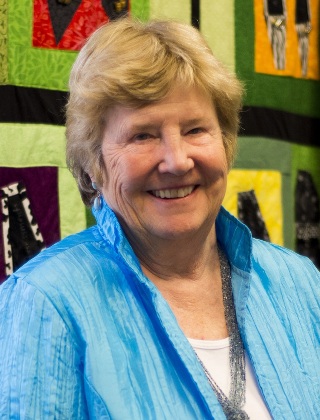
Katherine K. Merseth
Katherine Merseth's work concentrates teacher education, mathematics education, and the case-method of instruction. She was a member of the faculty of the Harvard Graduate School of Education for more than thirty-five years, founding the nationally renowned School Leadership Program, the Secondary in Education Studies at Harvard College and the Teacher Education Program, which featured mentorship training for experienced teachers who supervise student-teachers. More recently Merseth designed the Harvard Teacher Fellows program, which provided pre-service teacher education to Harvard College students beginning in their senior year. The program incorporates a residency (practicum) in schools and is supported by online and residential courses at Harvard. The program is heavily based in research about how beginning teachers learn to teach.
In the Professional Education realm, Merseth has chaired and taught in more than 15 programs for education leaders across the United States as well as from Qatar, Kuwait, Brazil, Chile, Jordan, Greece, Australia and Saudi Arabia. Through her work with teacher educators internationally, she has edited six volumes of cases about classroom teaching practice in South Africa, Chile, Brazil and Jordan. These books are available in English as well as the preferred language of the country. She has extensive consulting and teaching experience in many countries and understands the importance of culture on teaching practice.
Merseth also taught teaches in the General Education Program of Harvard College for nearly 10 years. Her course, the Dilemmas of Excellence and Equity in K–12 American Schools, drew the interest of over 450 Harvard College students each semester and had some of the strongest student rankings in the College. For this work she was ranked as one of the top 15 professors in Harvard College in 2017 and in 2018 she was honored with the highest award for teaching excellence, The Phi Beta Kappa Teaching Prize from Harvard College. Building on the popularity of this course, Merseth helped create a secondary concentration (known as a "minor") called The Education Studies Program— a sequence of courses to enhance the study of education — to be offered by Harvard College.
In mathematics and STEM education, she was the principal investigator of the Mathematics Case Development Project and the Regional Math Network, and the Massachusetts Math and Science Partnership working with middle school mathematics teachers using classroom-based cases, all funded by the National Science Foundation (NSF); she also served as co-principal investigator of the Teacher Education Addressing Mathematics and Science in Boston and Cambridge Project. Her book, Windows on Teaching Mathematics: Cases of Secondary Mathematics Classrooms (Teachers College Press), represents work in mathematics education and the case method while her involvement as a case method teacher of school administrators exists in her Cases in Educational Administration (Longman).
In 2012, Merseth was awarded a Harvard Initiative on Teaching and Learning (HILT) award for a four-year study exploring the use of a new technology platform to enhance the teaching of controversial topics. Merseth has served as a curriculum developer, teacher, and administrator in K–12 schools. In addition to her Harvard doctorate, Merseth holds a bachelor's in pure mathematics from Cornell University, a master's in pure mathematics from Boston College, and a master of arts in teaching secondary mathematics from Harvard.
Abstract:
Teaching and Learning in the 21st century: What is the Purpose and Relevance of the Teacher?
Amid the many challenges we face in education in the 21st century, a frequently asked, though not often answered question, is “What is the role of the teacher?” Is the traditional role of the teacher as a source of knowledge and guide for student learning obsolete? As society has changed, has the role of the teacher changed? Should it? If students can learn and create new knowledge using a variety of learning tools such as AI, Wikipedia, Zoom and YouTube, are teachers even necessary?
We have long valued teachers. From earliest days, the school master was revered and respected. Communities often provided housing and food for these individuals. More recent research documents their importance with studies noting “Teachers matter more to student achievement than any other aspect of schooling… teachers matter the most. When it comes to student performance on reading and math tests, teachers are estimated to have two to three times the effect of any other school factor., including services, facilities and even leadership.” (Rand, 2019).
But times have changed and continue to change. Demands are increasing for teachers to educate for the future, but will the future look like? If you imagine how the world has changed since today’s seniors were in kindergarten, how can teachers prepare for the needs of society and its educational system in another 12 years?
The highly unusual and undesirable experience of the world-wide COVID epidemic taught us many things: Students don’t want to go to school--absenteeism is on the rise. Children don’t need to go to school to learn. Teachers are fatigued and leaving the profession at alarming rates. Learning rates in the United states and other developed countries are flat or falling. Perhaps the most important, yet insidious, change is that parents no longer have unwavering trust in the purpose of schooling.
Changes in government policy, differing societal demands, economic uncertainty and tumultuous political environments challenge not only the role of the teacher, but also raise an even more fundamental question about the purpose of schools. The value of education is no longer a self-evident given. Why do we have schools? What is their purpose? The United States spends well over $400 billion dollars each year to staff and maintain schools. Why? Have we come to a moment in time where the very notion of schooling is outdated and no longer relevant? What will the future hold and what will be the necessary skills of teachers, administrators and policy makers in the future?